Sign in. It’s quick, free and it’s up to you.
An account is an optional way to support the work we do. Find out more.
Sign in. It’s quick, free and it’s up to you.
An account is an optional way to support the work we do. Find out more.
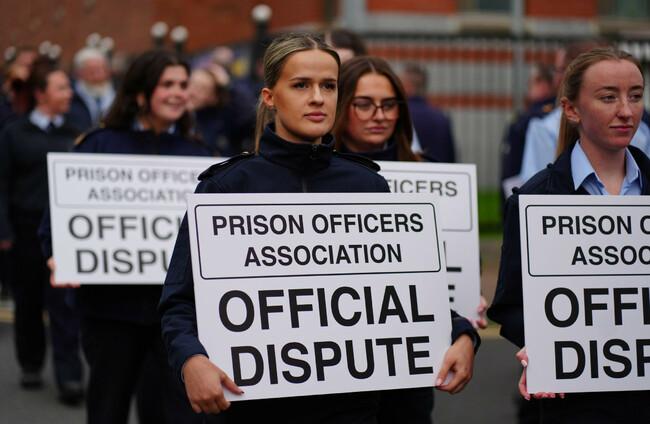
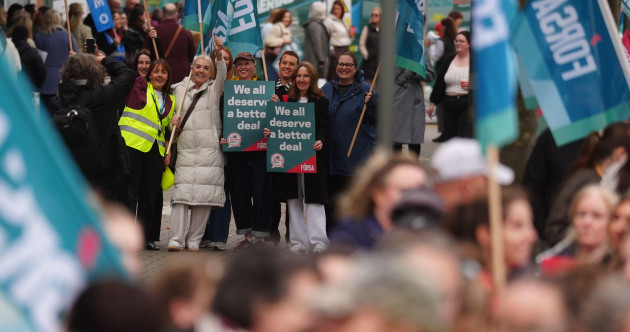
THE LARGEST STRIKE in Ireland in a generation is underway, with around 300,000 public sector workers engaging in industrial action today.
The strike has been flagged for weeks, but it’s been months in the making.
How did it come to this?
The first key date was 30 June, when the last public sector pay deal (called The Public Service Agreement) expired without a new deal to replace it.
Almost two weeks beforehand, Kevin Callinan, the general secretary of Ireland’s largest public service union Fórsa, was preparing for possible strike action because he said there was ”no basis” for negotiations on a new agreement.
The unions say they want a new deal that would also cover the second half of 2026, protect future purchasing power (i.e. the amount their money can buy), and address the purchasing power that they claim their members have lost to inflation since 2021.
The row also centres on unions’ demand that pay be addressed upfront, while ministers have recently insisted that “nothing is agreed until everything is agreed”, keeping any pay settlement tied to a wider deal.
As Ireland experienced its hottest summer on record, unions including Fórsa, Siptu and Unite consulted their members about possible industrial action.
Fórsa then announced on 9 September that public health members would begin a work-to-rule on 30 September, followed by a similar announcement from Siptu the following day.
The work-to-rule would involve staff continuing to perform their core duties while withdrawing cooperation with additional work, like covering vacant posts and working unscheduled overtime.
On 11 September, the Irish Congress of Trade Unions (ICTU) - the umbrella organisation for trade unions in Ireland – agreed that a coordinated strike action would take place on 14 October, with 21 October also earmarked if needed.
The work-to-rule began on 30 September, involving over 100,000 workers across health, education, local authorities and the civil service.
The work-to-rule expanded on 5 October to include the Irish National Teachers’ Organisation for primary teachers and the Association of Secondary Teachers Ireland for post-primary teachers; the Teachers’ Union of Ireland joined on 12 October.
On 6 October, the government delivered Budget 2027, which included a €1.2 billion allocation for a new pay deal.
Minister for Public Expenditure Jack Chambers referenced the proposed strike in his speech in the Dáil, calling on unions to re-engage with the government “as a matter of urgency” to stand down their ongoing action.
Chambers has claimed that recent public service pay agreements have outstripped inflation, and that the government has met ICTU 12 times this year.
The government then intervened with an 11th-hour proposal on Monday 12 October, when it invited trade union leaders to the Workplace Relations Commission (WRC) for further talks.
That invitation was ultimately rejected, with unions saying that the government’s offer contained no meaningful change.
The strike is now ongoing, but the door for talks is slowly creaking ajar.
Chambers said on Tuesday night that pay could be a starting point for negotiations, and Fórsa’s Kevin Callinan told The Journal that this could pave the way for a breakthrough if the minister was “sincere”.
Watch this space.

To embed this post, copy the code below on your site












have your say